C-1 Mathematics and Science Introduction
In this section, you will build the math and science skills that are essential for success in the plumbing trade. Plumbers use these skills every day to measure, calculate, and solve problems on the job. You will learn how to work with whole numbers, fractions, decimals, and percentages, and how to apply formulas to calculate area, volume, and capacity. You will also explore important scientific principles that relate to plumbing systems, including pressure, fluid flow, heat transfer, and the behaviour of gases and materials. By the end of this section, you will be able to perform accurate calculations, understand how piping systems work, and apply these concepts safely and effectively in real-world situations.
Learning Objectives
After completing this section, you should be able to:
- Add, subtract, multiply and divide whole numbers, fractions, decimals and percentages.
- Transpose formulas.
- Use formulas to calculate area, volumes, and capacity.
- Perform conversions.
- Calculate piping measurements.
- Use the Pythagorean theorem of right angles.
- Calculate offsets using the applicable trigonometric function.
- Calculate required measurements for piping offsets.
- Define the properties of matter.
- Use Pascal’s theory of pressure and force.
- Use Archimedes’ principles of displacement and flotation.
- Define mechanical advantage as it relates to fluid power.
- Describe factors that affect fluid flow in a piping system.
- Describe factors that affect gas volumes and pressures.
- Calculate the expansion and contraction of various piping materials due to heating and cooling.
- Define methods of heat transfer.
- Perform heat load calculations.
- Describe characteristics of hydrocarbon gases.
Topic areas covered in this publication are in alignment with SkilledTradesBC Harmonized 2018 Program Outlines.

Supplementary Resources
The best way to improve on your math skills in the Trades is to practice. The following resources, available from Mark Overgaard from Camosun College, and Chad Flinn at BCcampus, may help you further:
- Math for Trades: Volume 1, by Chad Flinn and Mark Overgaard, available from BCcampus
- Math for Trades: Volume 2. by Chad Flinn and Mark Overgaard, available from BCcampus
- Math for Trades: Volume 3, by Chad Flinn and Mark Overgaard, available from BCcampus
- Videos: OER for Trades: Math for Trades
- Trades Access Common Core Line C: Tools and Equipment Videos – BCcampus by Camosun College.
ITA Calculator Policy Note
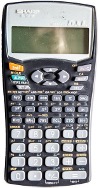
SkilledTradesBC has implemented a policy regarding the type of calculators that may be used on all ITA-administered exams, including the Inter-Provincial Standards exam (IPSE). The calculator specified for piping trades is the Sharp EL-520X. You should start using this calculator early in your training so that you are familiar with it and will avoid having difficulties during important exams.
Be sure to take the time to thoroughly read the operation manual. You will be using many of the functions available with this model during this course.
Scientific calculator
Modern scientific calculators generally have many more features than a standard four- or five-function calculator, and the feature set differs between manufacturers and models. However, the defining features of a scientific calculator include:
- Scientific notation
- Floating point arithmetic
- Trigonometric functions
▸ It is very important that your calculator be in the right mode. For the majority of your work the mode should be in “deg” or degree mode. This notation will appear in the screen of your calculator.
- Exponential functions and roots beyond the square root
- Quick access to constants such as π (pi)
Terminology
The following terms may be used throughout this section. Note that some glossary terms may be in italics throughout the section content but are not included in this list. A complete list of terms for Section C-1 can be found in the Glossary.
- addition: Finding the total when two or more numbers are put together. (Section C-1.1)
- absolute pressure: The total pressure measured from a perfect vacuum (zero pressure). (Section C-1.6)
- Archimedes’ Principle: States that an object placed in a fluid (liquid or gas) is pushed upward by a force equal to the weight of the fluid it displaces. (Section C-1.13)
- atmospheric pressure: The pressure created by the weight of air around the Earth. (Section C-1.6)
- common denominator: A number that is the same on the bottom of two or more fractions so they can be added or subtracted. (Section C-1.1)
- conductivity: The ability of a material to let heat or electricity pass through it. (Section C-1.11)
- conservation of energy: Energy cannot be created or destroyed—it can only change from one form to another (like from heat to movement), meaning the total amount of energy always stays the same, even when it changes form. (Section C-1.15)
- conversion factor: A number used to change one unit of measurement into another. (Section C-1.6)
- cubic unit: A unit used to measure volume, based on length × width × height (for example, m³ or ft³). (Section C-1.6)
- decimal: A number that shows parts of a whole using a decimal point (for example, 0.5). (Section C-1.1)
- decimal point: A dot used to separate whole numbers from parts of a number. (Section C-1.1)
- denominator: The bottom number in a fraction that shows how many equal parts there are in total. (Section C-1.1)
- difference: The answer you get when you subtract one number from another. (Section C-1.1)
- differential pressure: The difference between two pressure measurements. (Section C-1.6)
- dividend: The number that is being divided. (Section C-1.1)
- divisor: The number you divide by. (Section C-1.1)
- division: Finding how many times one number fits into another number. (Section C-1.1)
- fitting allowance (FA): The distance from the end of the pipe inside a fitting to the centre of the fitting; this value changes depending on the type and size of the fitting. (Section C-1.7)
- flashback: A dangerous condition where a flame travels backward into the burner or piping because the flame speed is faster than the gas–air mixture leaving the burner. (Section C-1.20)
- fraction: A number that shows equal parts of a whole. (Section C-1.1)
- gauge pressure: (sometimes referred to as overpressure); the pressure measured above atmospheric pressure. (Section C-1.6)
- hydrocarbon gas: A gas made up of hydrogen and carbon atoms, commonly used as a fuel. (Section C-1.20)
- hypotenuse (travel): The longest side of a right triangle, opposite the right angle. (Section C-1.9; Section C-1.10)
- improper fraction: A fraction where the top number is equal to or larger than the bottom number. (Section C-1.1)
- inverse operation: An opposite operation that undoes another operation (for example, addition and subtraction) (Section C-1.2)
- joule: The standard metric unit used to measure energy. (Section C-1.6)
- least common denominator (lcd): The smallest number that two or more denominators can divide into evenly. (Section C-1.1)
- lowest terms: A fraction written in its simplest form, where the top and bottom numbers cannot be divided further by the same number. (Section C-1.1)
- mixed number: A number made up of a whole number and a fraction (for example, 2 ½). (Section C-1.1)
- multiplication: A short way of adding the same number more than once. (Section C-1.1)
- numerator: The top number in a fraction that shows how many parts you have. (Section C-1.1)
- offset (piping): A small change in direction in a pipe that helps absorb movement caused by expansion or contraction. (Section C-1.17)
- order of operations (BEDMAS): A rule that tells you the correct order to solve a math problem. It stands for Brackets, Exponents, Division and Multiplication, and Addition and Subtraction; it helps you know which steps to do first so you get the right answer. (Section C-1.2)
- pascal (Pa): The metric unit used to measure pressure. (Section C-1.6)
- percentage: A way of showing a number out of 100 using the symbol %. (Section C-1.1)
- place value: The value of a digit based on its position in a number. (Section C-1.1)
- psid (pounds per square inch differential): An imperial unit of pressure that measures the difference between two pressure readings in a system (i.e., differential pressure). (Section C-1.6)
- product: The answer you get when you multiply numbers. (Section C-1.1)
- proper fraction: A fraction where the top number is smaller than the bottom number. (Section C-1.1)
- Pythagorean theorem: A formula used to find the longest side of a triangle using the other two sides. (Section C-1.10)
- quotient: The answer you get when you divide one number by another. (Section C-1.1)
- reciprocal: A fraction turned upside down (for example, 1/2 becomes 2/1). (Section C-1.1)
- remainder: The amount left over after division when a number does not divide evenly. (Section C-1.1)
- specific gravity (SG): (relative density); a number that compares how dense a substance is to water. (Section C-1.13)
- streamline flow: (laminar flow); smooth fluid flow where the liquid moves in layers without mixing. (Section C-1.15)
- subtraction: Taking one number away from another. (Section C-1.1)
- sum: The answer you get when you add numbers. (Section C-1.1)
- thread engagement (TE): The distance from the face of a fitting to how far the pipe screws into it; this distance changes depending on the size of the pipe. (Section C-1.7)
- throw (centre to face [C-to-F]): The distance from the centre of a fitting to its face (end). (Section C-1.7)
- units (ones place): The place value of the digit farthest to the right in a whole number. (Section C-1.1)
- venturi (narrowing): A section of pipe that narrows, causing fluid to speed up and pressure to decrease. (Section C-1.15)